The Strange Death of Tycho Brahe
October 24, 1601
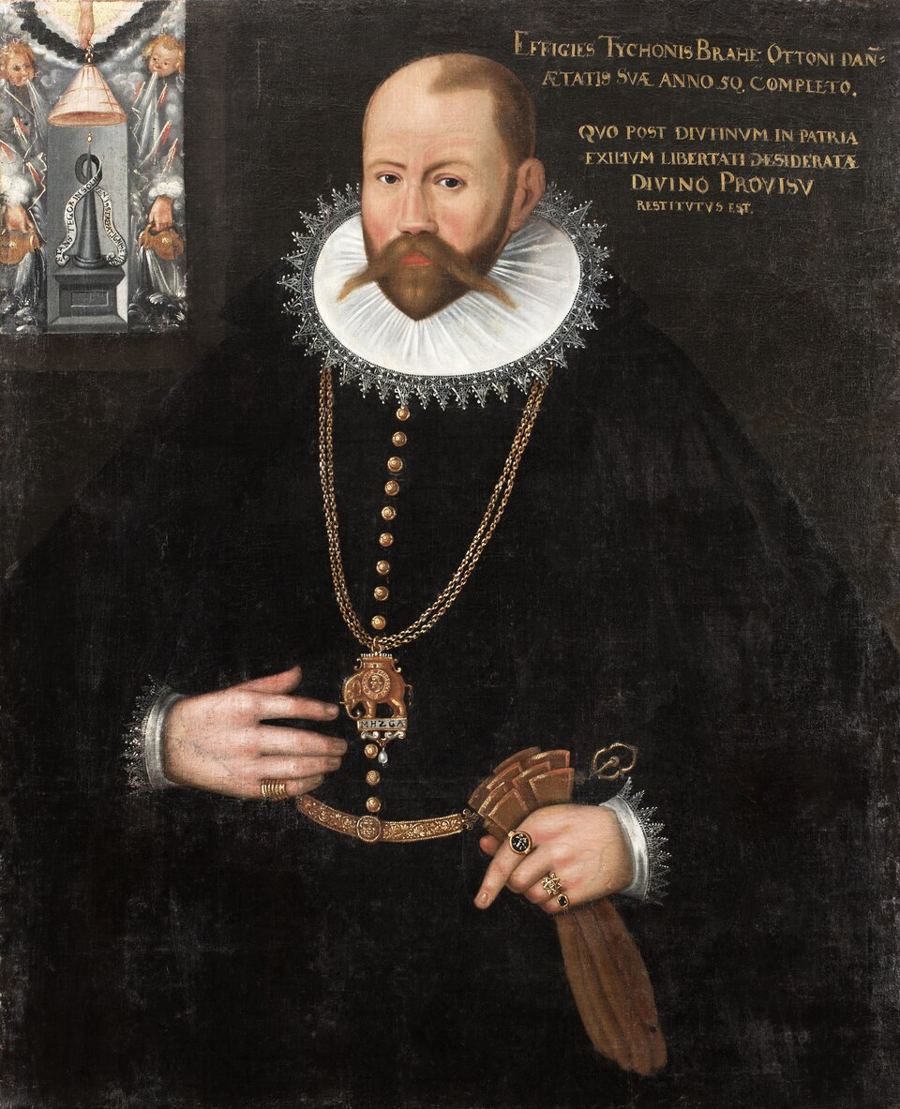
Tycho Brahe was one of the greatest astronomers before the telescope, a Danish nobleman with a metal nose, a private island observatory and, legend says, a tame elk. His death in Prague in 1601 was sudden and painful, and almost at once people whispered that he had been poisoned. It took an exhumation more than four centuries later to settle part of the mystery.
The astronomer with a metal nose
Tycho lost part of his nose in a sword duel in 1566. Both Wikipedia and Aarhus University's Tycho Brahe project tell the story; Wikipedia says it was a duel with his cousin Manderup Parsberg. He wore a prosthetic nose for the rest of his life.
His real fame came from his observations. Wikipedia says King Frederick II of Denmark gave him the island of Hven and money to build Uraniborg, one of the first great observatories in Europe. By 1599 he was in Prague under the patronage of Emperor Rudolf II, and in his last year he was assisted by Johannes Kepler, who used Tycho's data to work out his laws of planetary motion.
A fatal banquet
The story of Tycho's death comes mainly from Kepler. Wikipedia says that, according to Kepler's first-hand account, Tycho attended a banquet in Prague and refused to leave the table to relieve himself because it would have been a breach of etiquette. Soon afterwards he was unable to urinate and fell seriously ill. Aarhus University says he died on 24 October 1601, only eleven days after the sudden onset of illness, and Wikipedia gives the same date and his age as 54.
Poisoned?
Rumours of poisoning arose soon after his death, Aarhus University says. Over the centuries suspects have included Kepler himself, who gained access to Tycho's precious data. The theory seemed to gain support when tests on hairs from Tycho's beard, removed during an earlier exhumation in 1901, found raised mercury.
Opening the tomb
In 2010 a Danish-Czech team led by archaeologist Jens Vellev of Aarhus University exhumed Tycho's remains in Prague, as both the university and Wikipedia describe; Wikipedia says his tomb is in the Church of Our Lady before Týn. They took samples of bone, beard and teeth.
Their results, Aarhus University reported in 2012, ruled out mercury poisoning: mercury levels in his beard and bones were not high enough to have killed him, and in his last weeks they actually fell to the low end of normal. The same team found that the famous nose was not silver or gold at all; the green stains on the skull contained copper and zinc, meaning brass. Wikipedia reports the brass finding too.
Myth versus reality
So was he murdered? The tests do not support mercury poisoning, the main version of the murder theory. Wikipedia says modern medical opinion favours a burst bladder or a prostate problem causing urinary retention and uremia. That makes the banquet story plausible, though it still rests on Kepler's account.
Then there is the elk. Wikipedia reports a tale from Pierre Gassendi's biography that Tycho kept a tame elk which, lent to a friend, drank too much beer, fell down the stairs and died. It is a wonderful story, but it comes from a single early biography, so treat it as legend.
Further reading
- Aarhus University: Mercury poisoning ruled out as cause of Tycho Brahe's death
- Wikipedia: Tycho Brahe