The Lawyer Who Proved His Point
June 17, 1871
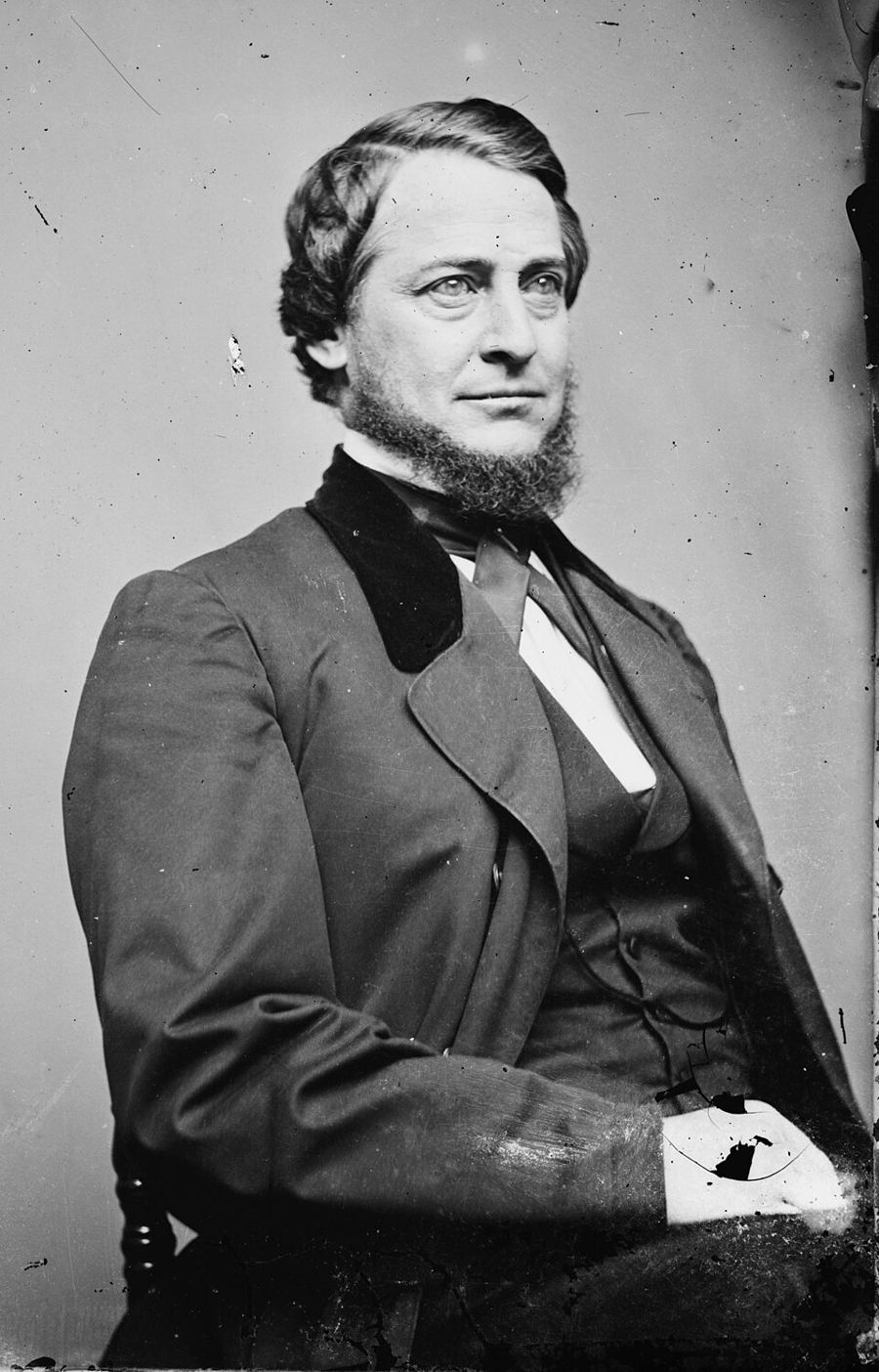
Clement Vallandigham survived arrest, a military trial and banishment to the Confederacy during the American Civil War. What killed him was a courtroom argument. In June 1871, defending a man accused of murder, he set out to show his colleagues how the victim could have shot himself by accident, and with the wrong pistol in his hand he proved the point on himself.
The most hated man in the North
Vallandigham was born in New Lisbon, Ohio, in 1820, the son of a Presbyterian minister. He practised law in Dayton, served in the Ohio legislature, and from 1858 to 1863 represented Ohio's 3rd district in Congress as a Democrat.
During the Civil War he became the best-known leader of the Copperheads, the Democrats who opposed the war and wanted a negotiated peace. In 1863 General Ambrose Burnside issued General Order No. 38, warning that expressing sympathy for the enemy would not be tolerated in his military district. On 1 May 1863 Vallandigham gave a speech at Mount Vernon, Ohio, calling the conflict 'a wicked, cruel, and unnecessary war'. He was arrested on 5 May, tried by a military commission, and convicted.
Lincoln had him sent through the lines to the Confederacy. He made his way to Canada and ran for governor of Ohio from a hotel in Windsor, Ontario, in 1863, but lost. His banishment inspired Edward Everett Hale's famous short story 'The Man Without a Country'.
Back to the law
After the war Vallandigham returned to Ohio and to his law practice, and to politics: by 1871 he was promoting the 'New Departure', a call for Democrats to accept the outcome of the war. A local obituary of the time described him as conspicuous for a month or two past as the originator of the new movement in the Democratic party.
That June he took on a murder defence in Lebanon, Ohio. His client, Thomas McGehan, was charged with killing Tom Myers in a room above a bar in Hamilton, Ohio. According to an American Bar Association account, several people witnessed the fight and it was common knowledge that the two men were enemies. An acquittal looked like a long shot.
A theory and a test
The trial began on 6 June 1871. Vallandigham's theory was that Myers had shot himself accidentally, while drawing his own pistol from his pocket as he got up from a kneeling position. On the afternoon of 16 June, according to the Tennessee Bar Association's account drawing on Frank Klement's biography of Vallandigham, he went out into the countryside and fired a revolver at a piece of cloth from different distances, to look at the powder residue and compare it with the victim's clothes.
Back at the Lebanon House hotel, he put his own still-loaded pistol down beside an unloaded one, which accounts describe as the pistol in the case. Two guns now lay side by side in his room.
The demonstration
That evening he was talking the case over with his co-counsel. A contemporary report reprinted in Warren County obituaries says that one of them, McBurney, had expressed doubts that Myers could have shot himself, and that Vallandigham picked up a pistol, saying he would show him. Klement's account has him put the gun in his trouser pocket and draw it out slowly, saying, 'There, that's the way Myers held it, only he was getting up, not standing erect.'
He had picked up the loaded gun. As it cleared his pocket it fired, and the ball entered the right side of his abdomen. The words attributed to him vary between accounts: 'My God, I've shot myself!', or, in the version quoted by the BBC, 'I have foolishly shot myself.' The 1871 report says he immediately said he had taken the wrong pistol.
The next morning
Surgeons probed for the bullet but could not find it. The contemporary report says Vallandigham watched them closely and even helped in the search. He died between nine and ten o'clock the next morning, 17 June 1871, aged 50. Wikipedia's account gives the cause as peritonitis and records his last words as an expression of faith in the Presbyterian doctrine of predestination. He was buried in Woodland Cemetery in Dayton.
The verdict
The accident made his argument in the most dramatic way possible. As a University of Kentucky law article on the case puts it, there was obviously something to Vallandigham's theory, and several of the lawyers and at least four of the jurors came to the room after the shooting. McGehan was eventually acquitted. Wikipedia's summary adds a final twist: McGehan himself was shot dead in his saloon four years later.
The BBC's Victorian Strangeness column found an even stranger postscript in the British press. According to the Fife Herald, hardly was Vallandigham in his grave before another man killed himself trying to demonstrate how Vallandigham had died.
Myths and what really happened
Retellings often say Vallandigham shot himself in open court in front of the jury. He did not: it happened in his hotel room, the night before he planned to demonstrate the theory in court. Accounts also differ on details such as who was in the room, what exactly he said, and whether the second gun was the victim's own pistol. The core story is consistent across contemporary and modern sources.
Legacy
The hotel where it happened, the Lebanon House, later became the Golden Lamb, which still operates as an inn and restaurant in Lebanon. Vallandigham is remembered both as the leader of wartime opposition to Lincoln and as a cautionary tale told to law students about the dangers of demonstrative evidence.
Further reading
- BBC: The lawyer who shot himself proving his case
- University of Kentucky: Not So Great Moments in Trial Advocacy
As posted on X: read the Stranger Than History thread
Sources
- https://en.wikipedia.org/wiki/Clement_Vallandigham
- https://www.bbc.com/news/blogs-magazine-monitor-28805895
- https://www.americanbar.org/groups/senior_lawyers/resources/voice-of-experience/2026-september/tough-way-to-win-a-case/
- https://uknowledge.uky.edu/cgi/viewcontent.cgi?article=1512&context=law_facpub
- https://warren.ohgenweb.org/Obits/vallandigham.htm