Kant's Last Words Were About a Drink
February 12, 1804
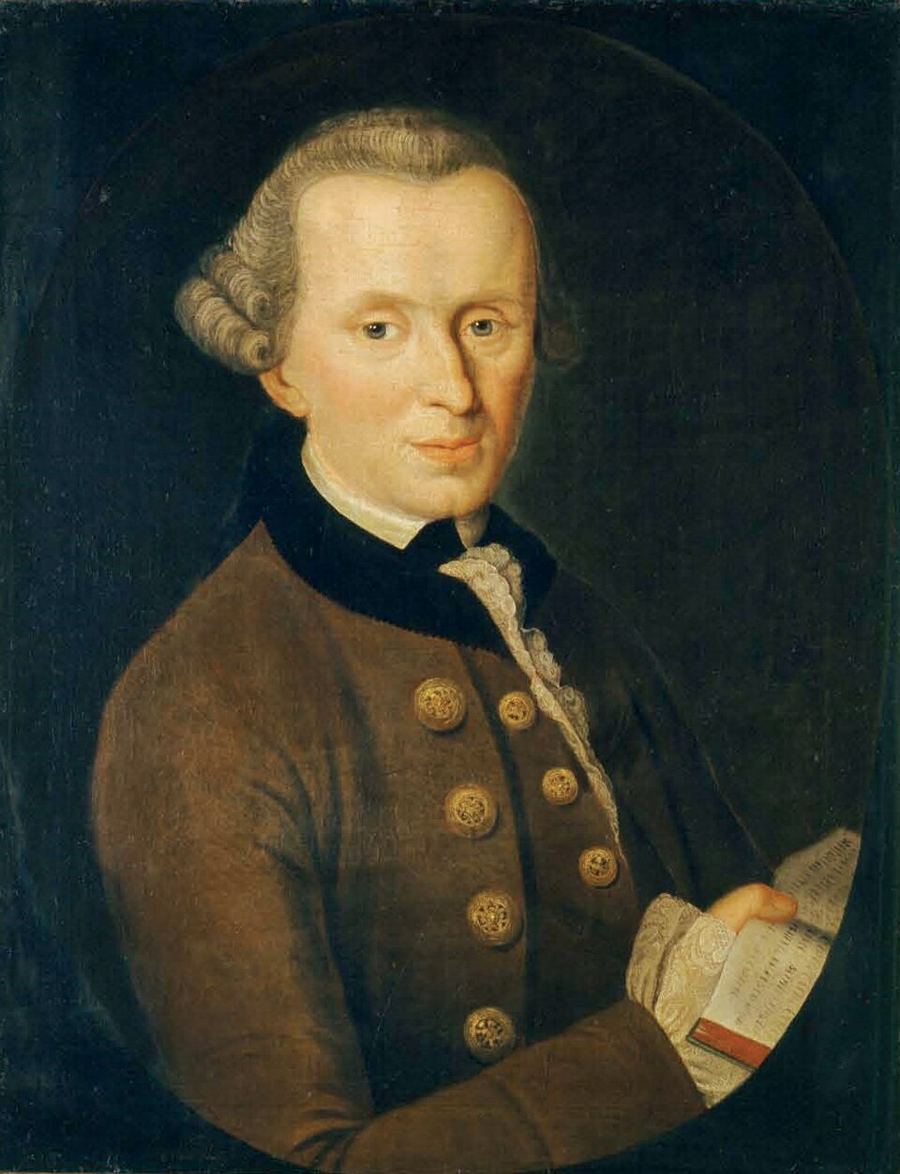
Famous last words tend to get polished in the retelling. Immanuel Kant's are among the shortest on record: three German words, 'Es ist gut', usually translated as 'It is good' or 'It is enough'. Quoted on their own, they sound like the closing line of a great philosophical system. The man who was holding the spoon tells a simpler story.
The philosopher of Königsberg
Kant was born in Königsberg in 1724 and spent almost his whole life there, studying and then teaching at its university. He is regarded as one of the central thinkers of the Enlightenment, the author of the Critique of Pure Reason and of works that still shape debates about knowledge and ethics. He was also known for clockwork habits; Wikipedia repeats the old line that neighbours set their watches by his daily walks, a story best treated as a local legend rather than a documented fact.
The long decline
Kant's final years were hard. The biographer Karl Vorländer, whose 1924 life of Kant draws on the memoir by Wasianski, describes a steady loss of strength and memory. By December 1803 Kant could no longer write his name legibly, so Wasianski took a general power of attorney to sign receipts for him. His eyesight and hearing failed, and his speech became hard to follow, though he could still recite Kepler's laws and, six days before his death, talk clearly at dinner about the Berbers of Algiers.
In his last weeks, Vorländer writes, Kant stopped recognising first his sister, then Wasianski, and finally his servant. From 3 February he barely ate. When his doctor visited that day, the frail Kant refused to sit down until the doctor did, and then, gathering himself, said: 'The feeling for humanity has not yet left me.' That line comes to us only through Wasianski's account, so we give it as his recollection.
A spoonful of wine
The famous words came on the last night, 11 to 12 February 1804. According to Wasianski's account as retold by Vorländer, the friend sat up with him and kept giving him a spoonful of wine mixed with water and sugar to refresh him, until Kant quietly said: 'Es ist gut.' They were the last words anyone heard from him.
Read in that setting, the phrase is less a verdict on life than a polite 'that's enough, thank you'. English and German Wikipedia both record 'Es ist gut' as his last words; German Wikipedia adds a cautious 'reportedly'.
The final morning
Around 4 am Kant shifted position and stayed still from then on. His pulse began to falter, and at about 11 o'clock that Sunday morning he died with his sister, a nephew, Wasianski, his servant and a colleague in the room. The local newspaper notice the next day, quoted by Vorländer, said he had died of complete exhaustion in his eightieth year. Wikipedia gives the same date and his age as 79.
Myths around the deathbed
Kant's death attracted legends almost at once. Vorländer passes on a story, with a careful 'is said to have', that a soldier on one of the city's bridges pointed to a single small cloud in the clear sky and told onlookers it was Kant's soul flying to heaven. Another account had the deathbed lit by the eerie half-light of a solar eclipse; Vorländer checked the calendar and concluded the eclipse fell on the day before, so the poetic image does not fit.
Afterward
Kant was buried at Königsberg Cathedral. According to Wikipedia, his remains were moved in 1880 to a chapel at the cathedral's north-east corner, and the city, renamed Kaliningrad after the Second World War, is now part of Russia; his mausoleum still adjoins the cathedral. The last words that are carved into popular memory are 'Es ist gut', but the spoonful of sweetened wine usually gets left out.
Further reading
- Karl Vorländer, Immanuel Kant: Der Mann und das Werk, 'Die letzten Monate. Das Sterben' (German, textlog.de)
- Wikipedia: Immanuel Kant
As posted on X: read the Stranger Than History thread