Canada's First Thanksgiving Was in the Arctic
1578
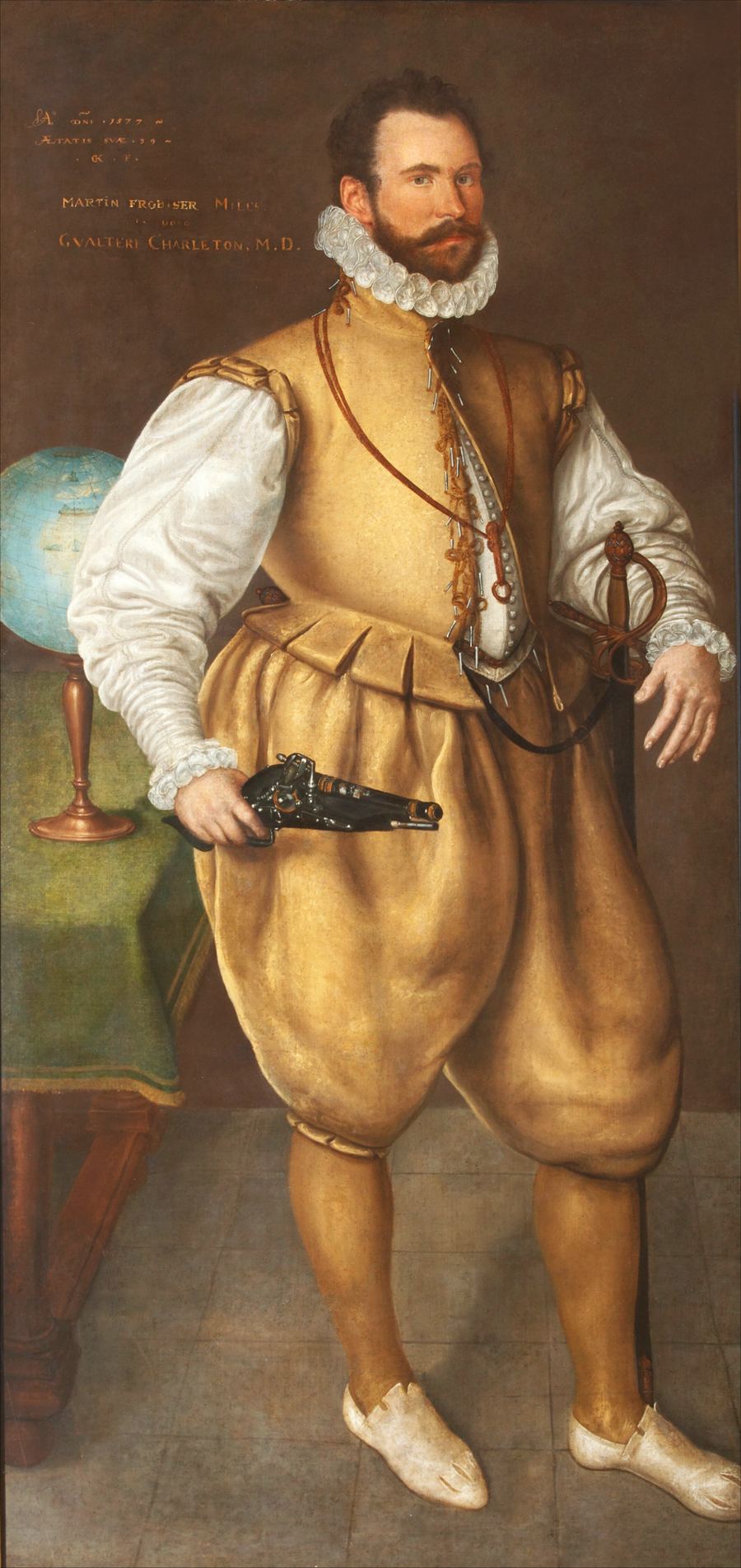
Canada's Thanksgiving story does not start with a harvest. It starts with icebergs, wrecked ships and a fleet of English sailors who thought they had found a gold mine in the Arctic. In 1578, after a terrifying crossing, Martin Frobisher's crews gathered in a bay on Baffin Island to thank God that they were still alive.
A gold rush in the Arctic
Frobisher first sailed to the eastern Arctic in 1576, hoping to find a Northwest Passage to Asia. He entered the bay on Baffin Island that now carries his name and brought home a piece of black rock. In London an assayer claimed it contained gold, and investors in the Company of Cathay poured money into more voyages, with Queen Elizabeth I herself naming the new land Meta Incognita, the 'unknown shore'. Wikipedia's account of his life describes how the second voyage in 1577 hauled back about 200 tons of the ore and largely abandoned exploration in favour of mining.
The third voyage, in 1578, was the biggest: Wikipedia counts 15 ships, and the plan included leaving a small settlement behind. It sailed from Plymouth in early June.
Ice and storms
The crossing was brutal. According to Wikipedia, the fleet was battered by ice and sudden storms that scattered the ships; the 100-ton barque Dennis was wrecked on an iceberg. When the scattered crews finally met again at their anchorage in Frobisher Bay, they had good reason to be grateful.
Canada's History magazine describes what happened next: the crews gave thanks and communion was observed, either ashore in Frobisher Bay or on board a ship anchored there. Wikipedia quotes the contemporary account: 'Maister Wolfall, a learned man, appointed by Her Majesty's Council to be their minister and preacher', preached a sermon urging them to be thankful for their 'strange and miraculous deliverance in those so dangerous places'.
The strangest details
This was not a feast. Nobody served turkey, squash or pumpkin; Canada's History notes that those foods reached Nova Scotia only in the 1750s. The 1578 event was a religious service, held by people who were in the Arctic to dig up rock.
The rock is the sting in the tale. Back in England the expedition's ore, eventually more than a thousand tons of it, was taken to a specially built smelting works at Dartford. Wikipedia says years of attempts produced no gold: the ore was worthless stone containing hornblende, and some of it ended up in walls and road surfacing.
Myth versus reality
Canada's History calls Frobisher's service the accepted 'first Canadian Thanksgiving', 43 years before the Pilgrims' celebration at Plymouth in 1621. That 'first' needs care. Wikipedia's Thanksgiving article notes that Spanish expeditions held similar services in North America decades earlier, so it was at most the first in what became Canada, and First Nations traditions of giving thanks are far older still, as Canada's History also points out.
There is also some untidiness in the record: Wikipedia's Thanksgiving article gives the date as 1579 and the place as Newfoundland in one sentence, while quoting a source about the anchorage in Frobisher Bay in the next. The 1578 voyage to Frobisher Bay is how both Canada's History and Wikipedia's article on Frobisher himself describe it, so that is what we use.
Aftermath
The planned settlement never happened, and the fleet headed home at the end of August 1578. When the 'gold' proved worthless the Company of Cathay collapsed, and Frobisher went on to other work at sea, including fighting the Spanish Armada. Modern Canadian Thanksgiving grew from different roots, and Canada's History notes that Parliament fixed the holiday to the second Monday of October only in 1957. Still, every October the story of a cold sermon in an Arctic bay gets retold as the holiday's unlikely beginning.
Further reading
As posted on X: read the Stranger Than History thread