Guðríður Símonardóttir: Kidnapped by Pirates from Iceland
1627
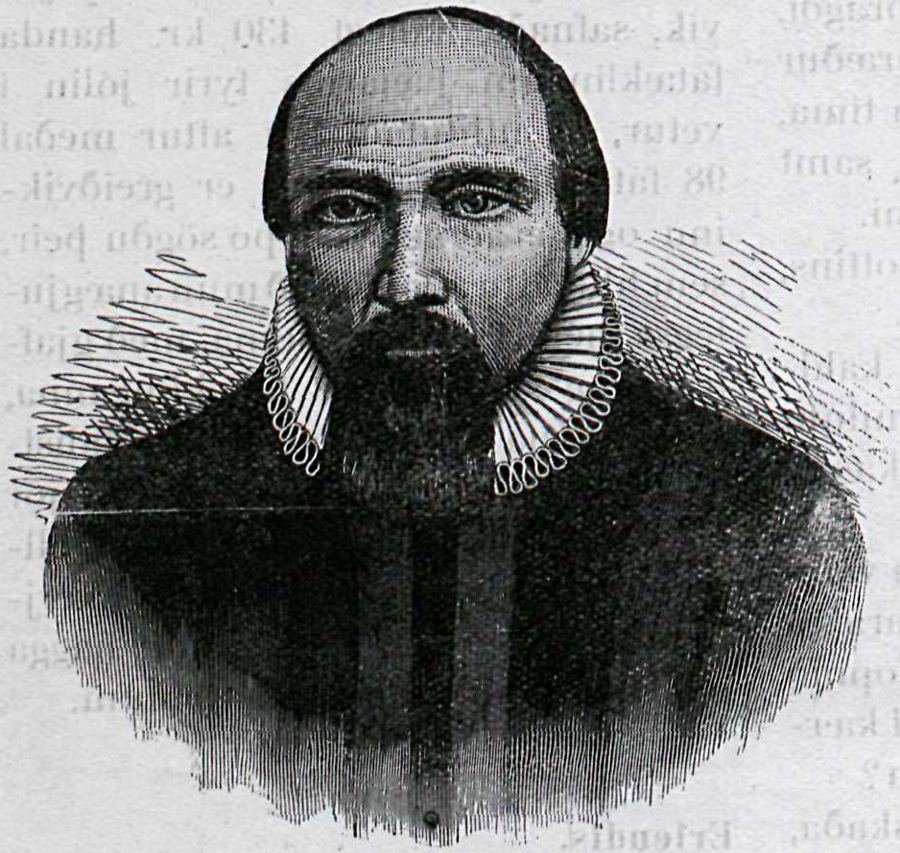
In the summer of 1627, pirates from North Africa did something that still astonishes Icelanders: they sailed all the way to Iceland and carried hundreds of people off into slavery. One of the captives was a fisherman's wife from the Westman Islands named Guðríður Símonardóttir. Her life afterwards took her from slavery in Algiers to Copenhagen, into a scandalous love affair, and finally into Icelandic legend.
The Turkish Raid
Icelanders call the raids of 1627 Tyrkjaránið, the 'Turkish Abductions' or 'Turkish Raid', though the raiders were corsairs based in North Africa rather than Turks from Turkey. According to an article in the Icelandic historical journal Saga, corsairs from Algiers and Salé in Morocco raided the east and south coasts of Iceland and the Westman Islands, killing about thirty people and taking some 400 captives to be sold into slavery.
The Westman Islands, off Iceland's south coast, were hit hardest. A Reykjavík guide site, drawing on the account of the captured priest Ólafur Egilsson, dates the attack there to 16 July 1627 and says the raiders landed away from the defended harbour, taking the islanders by surprise. Wikipedia puts the number of people abducted from the islands at 242.
Taken to Algiers
Guðríður was the wife of a fisherman, Eyjólfur Sölmundarson, who managed to escape the raiders. She was not so lucky. She and her young son were taken, and in Algiers she was sold as a slave. According to Wikipedia, her son remained in Algeria.
Remarkably, a copy of a letter she wrote to her husband from captivity survives. The Women on the Move (WEMov) catalogue, which describes the manuscript held by the Árni Magnússon Institute for Icelandic Studies, calls it the only surviving letter by an enslaved Icelandic woman among the captives, though only its first page survives in a bishop's copybook. The date is uncertain: WEMov dates the copy to 1635, while Wikipedia says she wrote in 1631.
Ransomed
Ransoming captives was expensive, and only a few came home. Money was raised in Iceland and Denmark, and the Danish crown, which ruled Iceland, arranged payment. WEMov and the Reykjavík guide site agree that in 1636 a ransom was paid for 34 Icelandic captives in Algiers, and that 27 of them made it back to Iceland; the guide site says six died on the way and one stayed behind. Guðríður was among them. According to Wikipedia, she had also managed to save some money of her own towards buying her freedom.
A tutor in Copenhagen
The freed captives travelled home by way of Copenhagen. After years in a Muslim city, the Danish authorities wanted them re-taught the Lutheran faith before they returned. Britannica says that in 1636 the job was given to Hallgrímur Pétursson, a young Icelander studying at Our Lady's School in Copenhagen. Among his pupils, Britannica notes, was a 38-year-old woman, Guðríður Símonardóttir.
Hallgrímur was about 16 years younger. Britannica and the Icelandic magazine Lifðu núna, interviewing the novelist and researcher Steinunn Jóhannesdóttir, both describe the age gap; Lifðu núna says he was 22. The two fell in love, and she became pregnant. Hallgrímur's studies came to an end.
A scandal, then a marriage
There was a problem: Guðríður was still, as far as anyone knew, a married woman. When the couple reached Iceland, they learned that her husband Eyjólfur had died, shortly before her return according to WEMov; Lifðu núna says he drowned at sea. According to Lifðu núna, the couple were fined for their relationship but they eventually married. Wikipedia and Lifðu núna date the wedding to 1638, after the birth of their son in 1637.
Life was hard at first. Britannica says Hallgrímur worked as a labourer and fisherman before becoming a parson, eventually at Saurbær from 1651 to 1669.
'Tyrkja-Gudda'
Hallgrímur went on to write the Passion Hymns, which Britannica calls among the most cherished devotional songs of the Icelanders. The great church in Reykjavík, Hallgrímskirkja, is named after him. Guðríður was remembered less kindly. Later folklore gave her the insulting nickname 'Tyrkja-Gudda' and told stories that she had secretly kept pagan or Muslim idols. Wikipedia notes that scholars have long dismissed these tales, and modern Icelandic plays and novels, including Steinunn Jóhannesdóttir's best-selling novel about her journey, have portrayed her far more sympathetically.
Legacy
Guðríður lived to her eighties and died in 1682, outliving her husband. Her story is a reminder that the Barbary slave trade reached as far north as Iceland, and her surviving letter gives a rare voice to one of its victims.
Further reading
As posted on X: read the Stranger Than History thread
Sources
- https://en.wikipedia.org/wiki/Guðríður_Símonardóttir
- https://www.womenonthemove.eu/catalogue-primary-so/letter-by-gudridur-simonardottir/
- https://www.britannica.com/biography/Hallgrimur-Petursson
- https://saga.sogufelag.is/english/saga-greinar/hverjir-voru-tyrkjaransmenn/
- https://yourfriendinreykjavik.com/pirate-attack-in-iceland-the-turkish-abductions/
- https://lifdununa.is/grein/astridufullar-astir-a-sautjandu-old/