The War of the Worlds Broadcast
October 30, 1938
The night before Halloween 1938, radio listeners heard dance music interrupted by bulletins: explosions on Mars, a strange object landing on a farm in New Jersey, creatures emerging, and then the army being wiped out. It was a radio play, Orson Welles's adaptation of H. G. Wells's The War of the Worlds. By the next morning newspapers said it had terrified the nation. The true story of that panic is almost as interesting as the legend.
A show in trouble
Smithsonian magazine, in an excerpt from A. Brad Schwartz's book Broadcast Hysteria, describes the Mercury Theatre on the Air as a low-budget CBS series with no sponsor that had run for 17 weeks. For Halloween week Welles wanted something different, and settled with Houseman and co-director Paul Stewart on Wells's 1898 novel about a Martian invasion.
Writing the fake news
Howard Koch was given the job of turning the novel into breaking-news bulletins. According to Smithsonian, he found the book dull and dated and at one point told Houseman it was hopeless; Houseman, unable to reach Welles, told him to keep going. A rehearsal was judged a disaster, and the team responded by building up the fake news section.
Those revisions made the show more convincing than anyone intended. Smithsonian notes the station break came about two-thirds of the way through rather than at the half-hour, so a listener who tuned in late could wait almost 40 minutes for a reminder that it was fiction. Wikipedia's account of the broadcast describes the same structure: calm bulletins interrupting music, then a reporter at Grovers Mill describing creatures emerging from a spacecraft.
The morning after
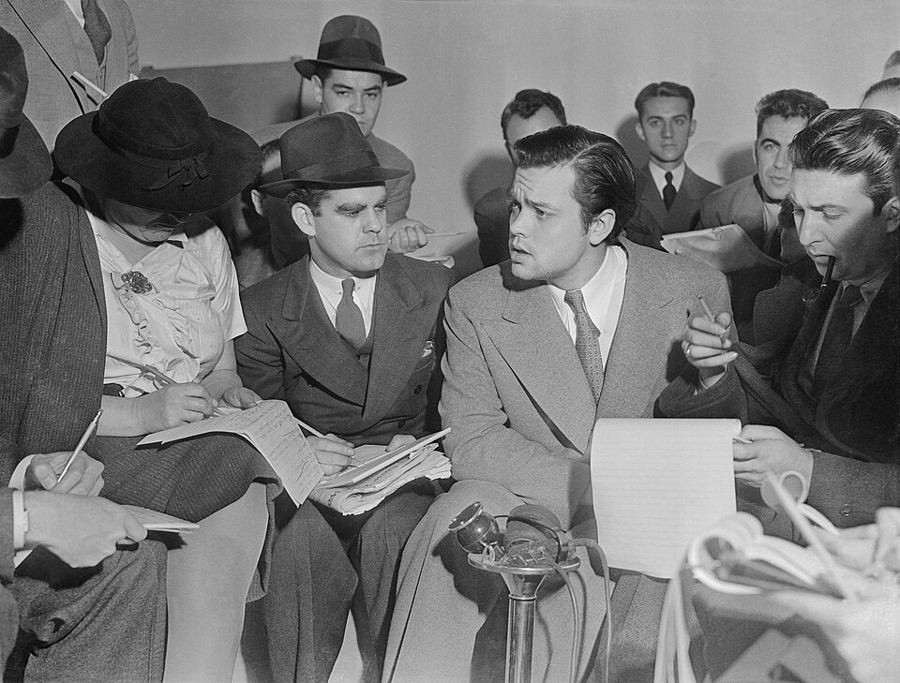
By the next morning, Smithsonian says, Welles's face and name were on front pages across the country, alongside headlines about a mass panic his broadcast had allegedly caused. He faced reporters at a hastily arranged press conference at CBS. Wikipedia says some newspapers and public figures called the news format deceptive and there were calls for regulation by the Federal Communications Commission.
Myth versus reality
The legend says millions fled their homes. The evidence is much thinner. Wikipedia says the scale of the panic is disputed: a Princeton study by Hadley Cantril estimated about six million listeners, but a ratings survey that night by the C. E. Hooper company found only two percent of respondents were listening to the play. Later researchers, Wikipedia notes, concluded Cantril's study had serious flaws, and the number of protest letters was low compared with other controversial broadcasts.
Smithsonian's wording, a panic the broadcast had 'allegedly inspired', reflects the same doubt. Some listeners were genuinely frightened, but there is no good evidence of a nationwide stampede. Wikipedia also reports that a study found fewer than a third of frightened listeners thought the invaders were Martians; many assumed a German attack or a natural disaster.
Grovers Mill
The fictional landing site was real. Smithsonian's photo archive includes a Bettmann picture of a 76-year-old Grovers Mill resident posing with a shotgun to ward off Martians, and another showing the village intact the day after. Wikipedia notes that West Windsor township, where Grovers Mill lies, marked the 50th anniversary in 1988 with four days of festivities, and a plaque commemorates the broadcast.
Aftermath
The broadcast did not ruin Welles. Smithsonian says he had feared it would wreck his career; instead, it says, the broadcast catapulted him to Hollywood, where he would soon make Citizen Kane. Welles's own account of what he intended shifted over the years, Smithsonian notes, from protestations of innocence to hints that he had known exactly what he was doing.
Further reading
- Smithsonian: The infamous War of the Worlds broadcast was a magnificent fluke
- Wikipedia: The War of the Worlds (1938 radio drama)