How Fanta Was Born in Wartime Germany
1940
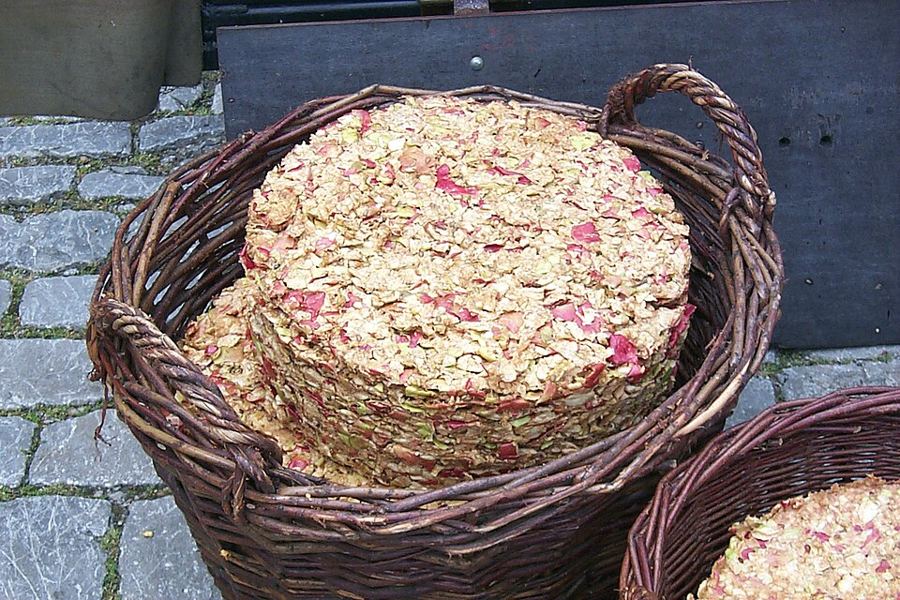
Fanta is now one of the best-known soft drinks in the world, sold in bright orange cans almost everywhere. Its origin is much less sunny. The drink was invented in Nazi Germany during the Second World War, when Coca-Cola's German operation was cut off from the syrup it needed and had to make something else out of whatever was left.
Coca-Cola in Germany
Coca-Cola had been bottled in Germany since 1929, and it sold very well in the years before the war. According to Sky History, German sales grew from about 100,000 crates a year in 1933 to 4.5 million in 1939. Atlas Obscura reports that in 1933 a German-born businessman named Max Keith took over the company's German subsidiary.
Keith was utterly devoted to the company. Historian Mark Pendergrast, author of a history of Coca-Cola, told Atlas Obscura that Keith valued his loyalty to the drink and the company above his loyalty to his country.
Cut off from the syrup
The war made the drink impossible to produce. Coca-Cola's own German history page says that during the Second World War the import of Coca-Cola concentrate into Germany was banned, leaving the business facing a serious problem. Sky History adds that a US trade embargo and the British naval blockade made the syrup ever harder to obtain. Atlas Obscura says that after the United States entered the war in December 1941, the Atlanta headquarters cut off contact with Keith altogether. Without the secret syrup, Keith could not make Coke, and the German factories risked standing idle or being seized.
A drink made from leftovers
Keith's answer was to invent a new drink using only what was available in wartime. Coca-Cola's German site dates this to 1940 and describes the result as a lemonade based on whey and apple pulp. Atlas Obscura and Sky History give a fuller list: leftovers from other food industries, including fruit scraps, apple fibres and pulp from cider pressing, whey (the watery by-product of cheesemaking) and beet sugar. Exactly which fruit went into any one batch depended on what could be found, and the taste is not recorded in any reliable detail.
For the name, Keith asked his team to use their imagination. Both Atlas Obscura and Sky History credit a salesman named Joe Knipp with suggesting 'Fanta'. Atlas Obscura says it was short for the German word Fantasie (imagination); Sky History says it came from fantastisch (fantastic). Either way, the name stuck.
Fanta keeps the business alive
Fanta sold surprisingly well, partly because there was little else to drink. Atlas Obscura and Sky History both report that sales reached about three million cases in 1943. Both also say that, with sugar strictly rationed, people used the sweet drink as a sweetener when cooking soups and stews.
The drink kept Coca-Cola's German operation running until the end of the war. According to Atlas Obscura, after the war Keith was praised in Atlanta for keeping the company's business in Germany alive and was given a senior role in Coca-Cola's European operations.
Was Keith a Nazi?
This is the part of the story most often told wrongly. Fanta is sometimes called 'the Nazi soft drink', as if the regime had ordered it. The sources do not support that. Pendergrast told Atlas Obscura that Keith was a collaborator, since no one could do business in Nazi Germany without working with the regime, but that he was not a member of the Nazi Party and his loyalty was to Coca-Cola, not to Hitler. Fanta was a business decision to keep the factories running, not a Nazi project.
The end of the first Fanta
Once Coca-Cola could be made in Germany again, the original Fanta was no longer needed. The sources disagree on when it stopped: Atlas Obscura says production ended before the end of 1945, while Sky History says it was discontinued completely in 1949.
Reborn in orange
The name came back in the 1950s. Both Atlas Obscura and Sky History say Coca-Cola relaunched Fanta in Italy in 1955 with a new recipe, this time based on oranges; Sky History says production began in Naples. Atlas Obscura adds that the new Fanta reached the United States in 1958.
The wartime origin has occasionally caused embarrassment. Sky History reports that in 2015, for Fanta's 75th anniversary, Coca-Cola pulled a German advertisement that recalled the 'good old times' of the drink's creation, after viewers complained that it glossed over the Nazi era.
Legacy
Today Fanta comes in dozens of flavours, and most people who drink it have no idea how it started. Its story is a reminder of how global brands carried on in wartime, and of how a drink made from cheese whey and apple scraps became one of the world's best-selling sodas.
Further reading
As posted on X: read the Stranger Than History thread