Violet Jessop, 'Miss Unsinkable'
November 21, 1916
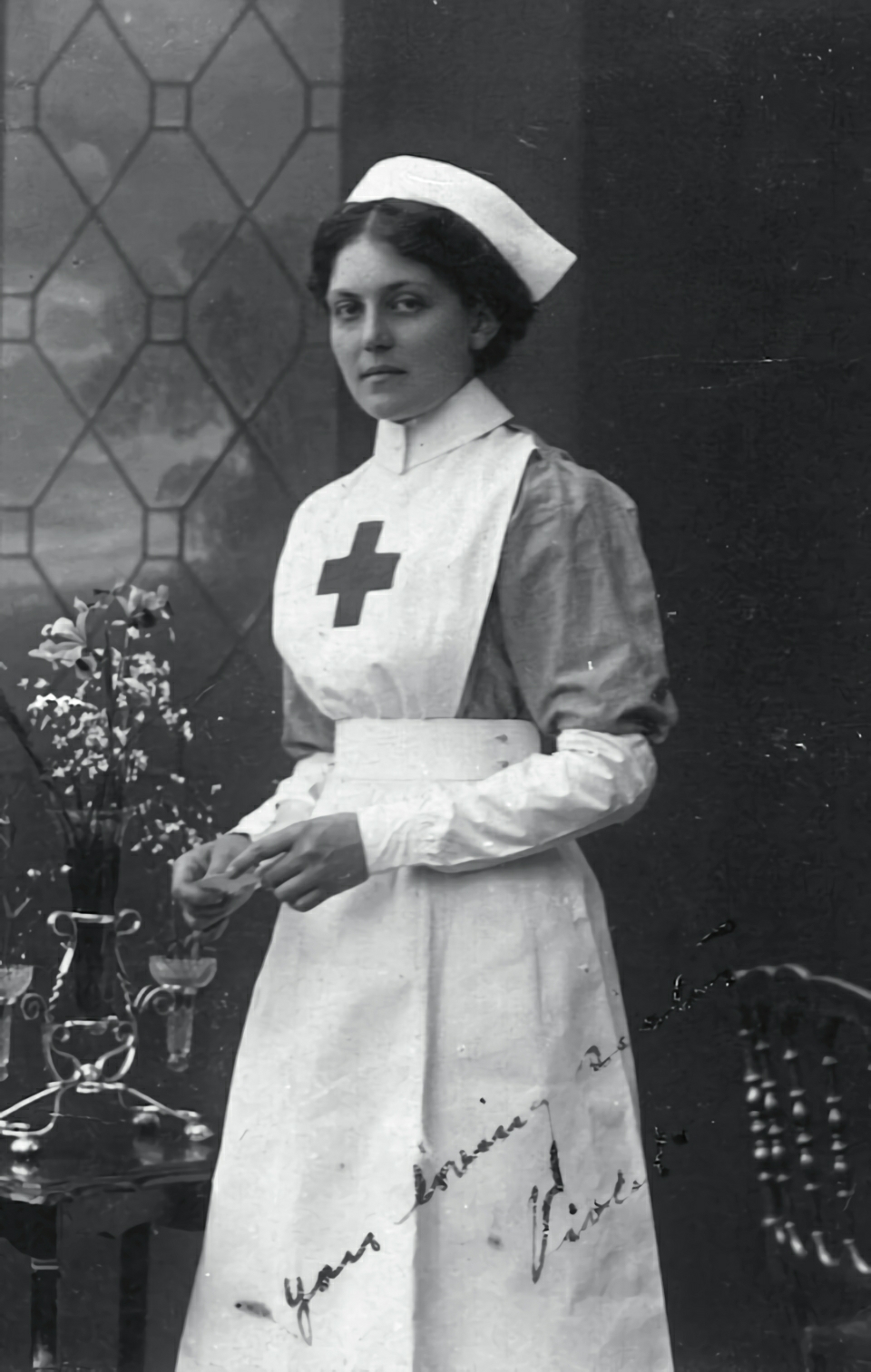
The Olympic-class liners were meant to be the safest, grandest ships afloat. Violet Jessop worked on all three of them, and all three met disaster with her on board. She was on the Olympic when it collided with a warship, escaped the sinking of the Titanic, and four years later jumped from a lifeboat as the Britannic went down. Then she went back to sea.
A hard start
Violet Constance Jessop was born in Argentina in 1887, the daughter of Irish immigrants who farmed sheep there, according to both National Geographic and Wikipedia. As a child she fell seriously ill with what is thought to have been tuberculosis and was not expected to survive, but recovered.
After her father died, the family moved to England. Both sources say her mother worked as a stewardess on ocean liners, and when her mother fell ill, Violet, then in her early twenties, followed her into the job to support the family. National Geographic says she was considered young for the position.
The Olympic
In 1911 Jessop joined the White Star Line's Olympic, then the largest liner in the world. On 20 September 1911 it collided with the British cruiser HMS Hawke, as National Geographic and Wikipedia both report. The Olympic was badly damaged but made it back to port, and Wikipedia notes there were no deaths. It was a near miss rather than a disaster, but it was the first of three.
The Titanic
While the Olympic was repaired, Jessop transferred to its sister ship, the Titanic, both sources say. On the night of 14 April 1912, four days into the maiden voyage, the ship struck an iceberg. National Geographic quotes her memoir describing a low, ripping, crunching sound, and her assumption at first that it was a drill.
Wikipedia says she was told to go up on deck to set an example for passengers who did not speak English, and that she was later put into lifeboat 16, where an officer handed her a baby to look after. National Geographic describes her watching from a lifeboat as the ship disappeared. More than 1,500 people died. Jessop was rescued by the Carpathia with the other survivors.
The Britannic
During the First World War, Jessop trained as a nurse, and both National Geographic and Wikipedia say she served on the Britannic, the third Olympic-class ship, which had been fitted out as a hospital ship. On the morning of 21 November 1916, in the Aegean Sea, it struck a German mine. The Imperial War Museums' catalogue of an oral history interview with Jessop gives the same date and describes her account of the sinking.
What followed was the most dangerous moment of her life. National Geographic says her lifeboat was being drawn into the ship's still-turning propellers, which were smashing boats and people. Both National Geographic and Wikipedia say she jumped into the sea and suffered a serious head injury. The IWM summary of her interview mentions her decision to jump, hitting her head on the underside of a boat and being rescued. Wikipedia says 30 of the 1,066 people aboard died.
Before leaving her cabin, she grabbed a few belongings. National Geographic says one was a toothbrush, because after the Titanic she had been teased for complaining that she had none; the IWM summary lists her rosary, prayer book and food among the things she collected.
Back to sea
Most people would have stayed ashore. Jessop did not. Both main sources say she returned to work on ocean liners after the war, and both give 1950 as the year she retired; National Geographic says she simply needed the work and that a life at sea was all she knew. She died in England in 1971, aged 83.
She is often called 'Miss Unsinkable', a nickname both sources use. Wikipedia adds a strange postscript from her later years: she said a woman once telephoned her on a stormy night to ask whether she had saved a baby on the Titanic, said 'I was that baby', laughed and hung up. Her biographer thought it was probably a prank, and Wikipedia notes that the only baby recorded in lifeboat 16 had died in 1931, so the call remains one more mystery in an extraordinary life.
Further reading
- National Geographic: She survived the Titanic, but it wasn't the only time
- Imperial War Museums: Violet Jessop oral history
- Wikipedia: Violet Jessop