Tsutomu Yamaguchi, Survivor of Two Atomic Bombs
August 9, 1945
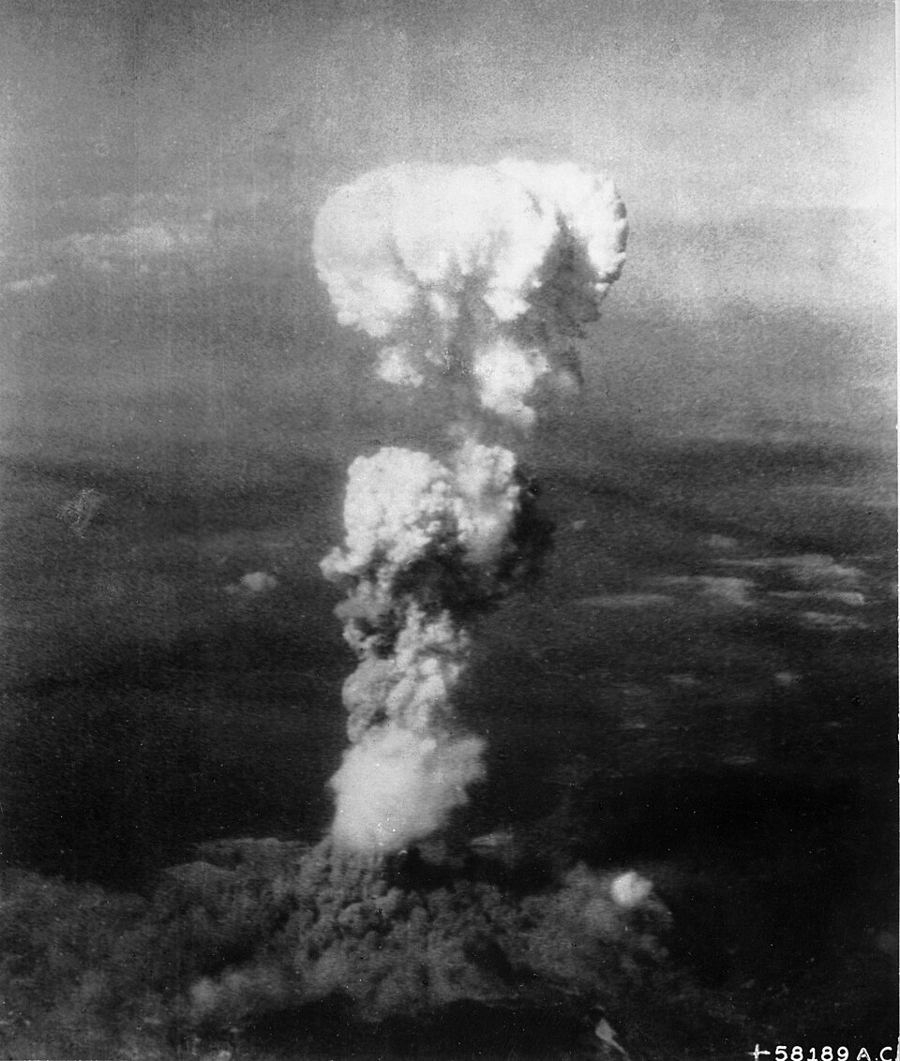
On 6 August 1945, a 29-year-old shipbuilding engineer on a business trip to Hiroshima was badly burned by the first atomic bomb ever used in war. He made his way home to Nagasaki. Three days later, the second bomb exploded over that city too. Tsutomu Yamaguchi survived both, and lived to 93.
A business trip
Yamaguchi was an engineer with Mitsubishi Heavy Industries, the shipbuilder, and lived in Nagasaki. The Guardian's obituary and Wikipedia both say he was in Hiroshima on business when the American B-29 Enola Gay dropped the atomic bomb on 6 August 1945.
Hiroshima
Wikipedia, drawing on interviews he gave, says he was walking toward the docks at 8:15 am when the bomb exploded about 3 km away. The Guardian puts him less than two miles from the blast. Wikipedia says it ruptured his eardrums, blinded him temporarily and burned the upper left side of his body; the Guardian says the bombings cost him the hearing in his left ear.
He spent the night in an air-raid shelter, according to the Guardian, and the next day began the journey home to Nagasaki, roughly 180 miles away, arriving two days after the bombing.
Nagasaki, three days later
Despite heavy bandages, Wikipedia says, Yamaguchi reported for work in Nagasaki on 9 August, and was describing the Hiroshima blast to his supervisor when the second bomb, dropped from the B-29 Bockscar, exploded over the city. Again he was about 3 km from ground zero, and this time, Wikipedia says, he was not hurt by the blast itself. The Guardian reports that he, his wife and baby son survived and spent the following week in a shelter. Japan surrendered less than a week later.
Wikipedia adds that he then suffered a high fever and continuous vomiting for more than a week, a detail that comes from his own accounts.
Only one, officially
The strangest part of his story is bureaucratic. In 1957 he received a survivor's health handbook. The Guardian reports that it originally recorded both cities, but the reference to Hiroshima was deleted when he renewed it in Nagasaki in 1960. Both sources say that only in March 2009 did the Japanese government formally recognise him as a survivor of both bombings, the only person ever officially recognised that way.
That does not mean he was the only person to live through both. The Guardian notes that about 165 people are known to have survived both attacks; Yamaguchi was the only one whose double exposure was officially certified. Retellings that call him 'the only man to survive both bombs' get this wrong.
Later life
After the war Yamaguchi worked as a translator for the occupying American forces, as both sources note, and later became a teacher. For decades he said little publicly. The Guardian reports that after his second son, who had been a baby at the time of the Nagasaki bombing, died of cancer in 2005, he began speaking openly, wrote books and songs, and in 2006 spoke at the United Nations in New York. He became a campaigner for nuclear disarmament.
'I could have died on either of those two days,' he told the Mainichi newspaper, as quoted by the Guardian. 'Everything that follows is a bonus.' He died of stomach cancer in Nagasaki in January 2010.