The Arrest of the Knights Templar
October 13, 1307
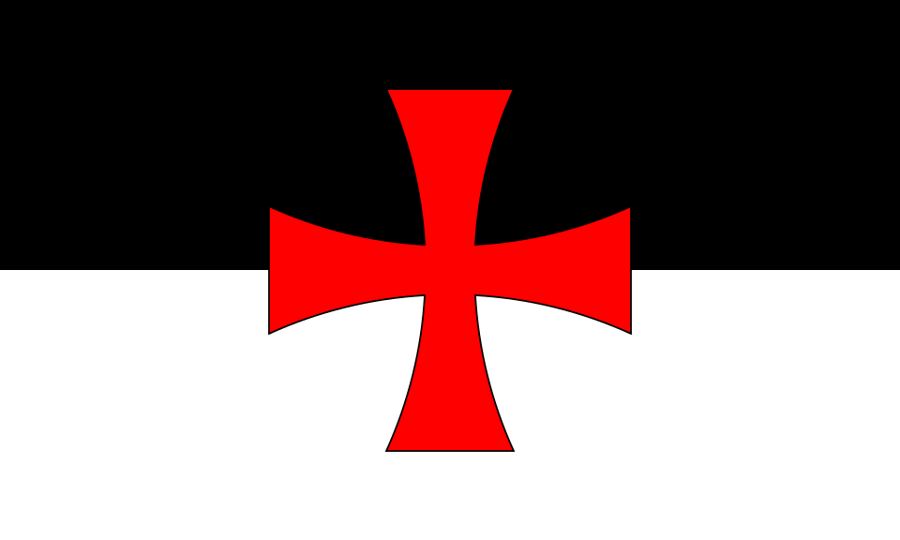
At dawn on Friday 13 October 1307, officers of King Philip IV of France arrested members of the Knights Templar across his kingdom in a single coordinated sweep. Within seven years the order had been dissolved and its last grand master burned alive in Paris. The legend of a curse from the flames, and the date of the arrests, have kept the story alive ever since.
Warrior monks turned bankers
The Knights Templar were founded after the First Crusade as warrior monks to protect Christian pilgrims travelling to Jerusalem. Their official name was the Poor Fellow-Soldiers of Christ and of the Temple of Solomon, and members took vows of chastity and poverty. As HISTORY explains, the order received generous donations of land and gold from European nobles to fund its campaigns against Muslim armies in the Holy Land. The individual knights were sworn to poverty, but the institution became anything but poor. Over the next two centuries, according to HISTORY, it gained landholdings and businesses across Europe, as well as tax-exempt status as a religious order, and lent money to nobles and kings, which has led to it being described as arguably the first international bank.
Its headquarters in Paris, called the Temple, was lavish. Jacques de Molay, its grand master from the early 1290s, had joined in 1265 and fought in Syria before the order withdrew to Cyprus after 1291, according to Britannica. In 1306 or 1307 Pope Clement V summoned him to France to discuss a new crusade, and de Molay himself asked the pope to investigate rumours being spread about the order.
A king in debt
King Philip IV of France, known as Philip the Fair, was mired in debt. In the early 1300s, HISTORY notes, disgruntled former Templars spread rumours that the order was financially corrupt and that its members practised devil worship and forbidden sexual acts in secret. Philip seized on the accusations as a chance to bring the order down and take its wealth.
The dawn arrests
Philip ordered the arrest of everyone associated with the order across France, and the arrests were carried out on a single day, Friday 13 October 1307. HISTORY gives an estimate of about 15,000 people rounded up, including knights, chaplains, servants and labourers; the number is an estimate, and many histories simply say thousands. Among those arrested was the grand master, Jacques de Molay.
The arrests spread beyond France. In England, Edward II, who married Philip's daughter Isabella in January 1308, came under pressure to follow suit, and Templars in England and Ireland were arrested in early 1308. Pope Clement V ordered further arrests elsewhere in Europe. What began as a French royal operation became a church-wide prosecution.
Torture and confession
Prisoners in France faced a long list of accusations of heresy, including spitting on the cross. Many were tortured to extract confessions: HISTORY describes elderly knights starved, hung with weights to dislocate their joints, and having their fingers crushed. Dozens died. Many confessed. According to Britannica, de Molay, probably under torture, confessed on 24 October 1307 that some of the charges were true, though he rejected others. When papal delegates later took over the inquiries, he and many other Templars retracted, saying their statements had been extracted by torture.
De Molay appealed to be judged by the pope personally, in 1309 and 1310. Instead, Pope Clement V decided to suppress the order with the bull Vox in excelso on 22 March 1312, at the Council of Vienne.
The fire
On 18 or 19 March 1314, in Paris, a commission of three cardinals sentenced de Molay and other leaders of the order to perpetual imprisonment; HISTORY describes it as a public display meant to have him admit his crimes. Instead, de Molay retracted his confession again. As a relapsed heretic he was burned by Philip's officers that same afternoon.
The curse
According to legend, de Molay called on Philip and Pope Clement V from the flames to join him before God's judgement within the year. Both men were indeed dead within the year: Clement V in April 1314 and Philip IV in November 1314. The curse itself is a legend, not a documented speech, but the coincidence gave it lasting power.
Friday the 13th
The arrests on a Friday the 13th, together with de Molay's curse, are often cited as one origin of the superstition that Friday the 13th is unlucky. It is only one of several suggested origins, and the link is a popular explanation rather than an established fact, so it is best treated with caution.
Legacy
The sudden fall of a rich and secretive order has fuelled centuries of speculation, from hidden treasure to secret survival. Britannica's verdict on de Molay himself is cool: it judges that he failed to exercise effective leadership when the order was being suppressed. Still, the documented history is dramatic enough: a cash-strapped king, a pliable pope, confessions extracted under torture, and a grand master who took back his confession knowing it would cost him his life.
Further reading
As posted on X: read the Stranger Than History thread
Sources
- https://en.wikipedia.org/wiki/Knights_Templar
- https://www.britannica.com/topic/Templars
- https://www.history.com/this-day-in-history/october-13/mass-arrests-of-the-knights-templar
- https://www.britannica.com/biography/Jacques-de-Molay
- https://www.historytoday.com/archive/months-past/knights-templar-arrested-france