The Dancing Plague of 1518
July 14, 1518
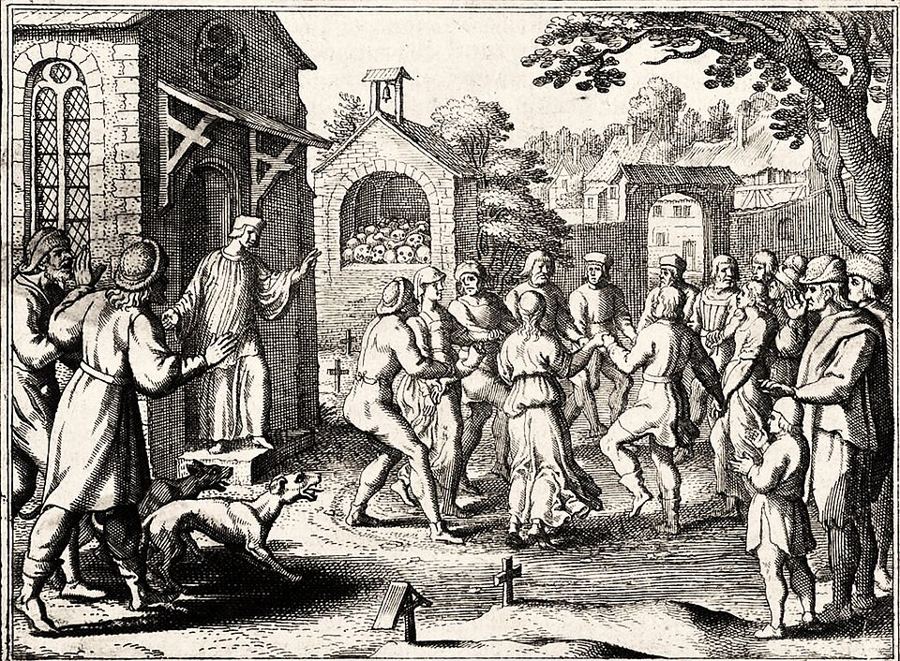
In the summer of 1518, people in the city of Strasbourg began dancing in the streets and could not, or would not, stop. Doctors were consulted, the city council intervened, and musicians were hired. Five centuries later historians are still arguing about what happened, but they agree on one thing: it really did happen.
A city under strain
Strasbourg in 1518 was a prosperous trading city on the Rhine, but the years leading up to that summer had been hard. Historian John Waller, who has written the most detailed modern studies of the outbreak, describes a run of bad harvests, high bread prices, hunger, and outbreaks of disease including smallpox, syphilis and leprosy in the region.
People also lived with deep religious fears. A popular belief held that Saint Vitus, a Christian martyr, could curse sinners with a compulsion to dance. That belief turns out to matter a great deal to how the outbreak unfolded.
The first dancer
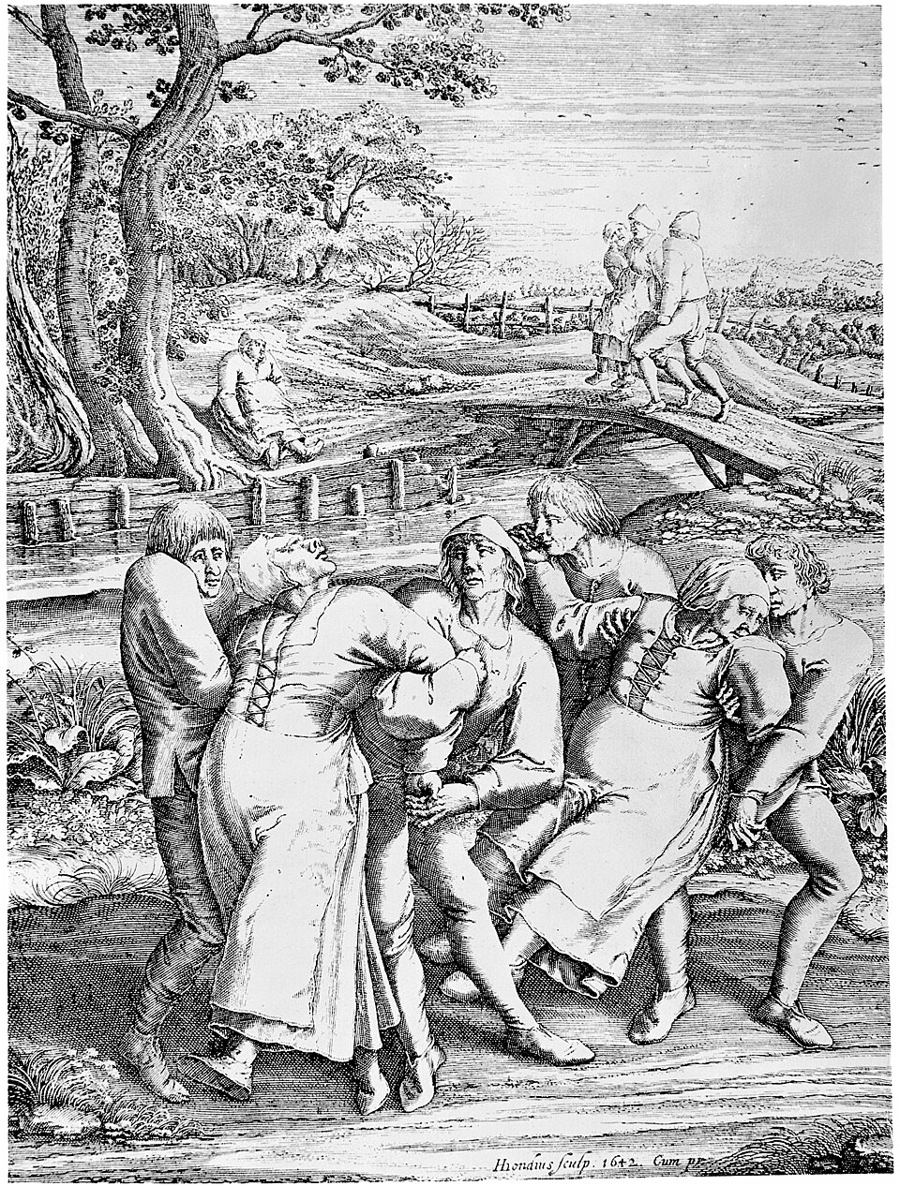
In July 1518 a woman began dancing in Strasbourg. In a letter to the bishop written at the time, the city magistrates said simply that it 'began with a woman, then with other people who started to dance'. A chronicle says she danced for six days before the council had her taken to the shrine of St Vitus near Zabern (Saverne), where she was cured.
Many retellings call her Frau Troffea. That name comes from the later writings of Paracelsus, and historians at Strasbourg's museums, who studied the sources for a 2018 exhibition, say the only authentic document leaves her anonymous. We therefore treat the name as legend.
Others soon joined her. One chronicle says 34 men and women were dancing within four days and more than 400 people were affected within four weeks; Brant's annals, preserved in a later copy, speak of about fifty people by mid-July. The figures vary, and historians treat the larger numbers with caution.
A cure that made it worse
The magistrates consulted physicians, who told them it was a natural illness caused by the stars and by the heat. Their advice survives: no wine, but barley water, bread and porridge, and music, though only gentle stringed instruments and organs rather than drums and fifes.
According to John Waller's reading of the records, the city also opened guild halls for the dancers and paid musicians to keep them moving, on the theory that they had to dance it out; one chronicle confirms dancers were taken to the guild halls. If the outbreak was psychological, as most historians now think, this public attention may have encouraged it to spread.
The crackdown
In early August the council changed course and banned public dancing and music. Respectable occasions such as weddings were allowed, but only with stringed instruments.
The authorities now treated the dancing as a punishment from Saint Vitus. The afflicted were taken to his shrine at the Hohlenstein, in the hills above Saverne. According to Sebastian Brant's annals, as copied by a later chronicler, they were given small crosses and red shoes, sprinkled with holy water, with crosses painted on the tops and soles. By early September the outbreak appears to have died down.
How we know
The 1518 outbreak is unusually well recorded for its time. Sources include the city council's letter to the bishop, its orders, local chronicles (some surviving only in later copies), sermons, and descriptions by the Renaissance physician Paracelsus, who visited Strasbourg about eight years later, in 1526, and wrote about the case. Each kind of source has its own biases: chroniclers liked dramatic numbers, and Paracelsus had his own theories to promote, including the story of the first dancer that gave us the name 'Frau Troffea'.
Historians piece the story together by comparing these accounts. Where official records and chronicles agree, as on the timing, the city's response and the pilgrimage to the shrine, we can be fairly confident. Where only later chronicles speak, as on the death toll, we have to be more careful.
Did people dance to death?
The most famous claim about 1518 is that people danced until they dropped dead, sometimes stated as fifteen deaths a day. This is the part of the story historians are least sure about. The figure comes from later chronicles, and the most contemporary official records do not confirm mass deaths. It is possible that some exhausted, malnourished dancers died, but the dramatic numbers should be treated as unproven.
What caused it?
One popular theory is ergot poisoning, from a fungus on damp rye that can cause convulsions and hallucinations. Most historians, including Waller, doubt it: ergotism tends to restrict blood flow to the limbs, which would make sustained dancing very hard, and it does not explain why the dancing was focused on a particular saint and place.
The leading explanation is mass psychogenic illness, sometimes called mass hysteria. Waller argues that intense hardship, combined with a widely shared belief that Saint Vitus could force sinners to dance, made people vulnerable to entering trance-like states, and that seeing others dance helped it spread. Similar outbreaks are recorded elsewhere, most notably a large one in 1374 in towns along the Rhine, which Waller notes is described in dozens of chronicles. Waller also points out that observers said the 1518 dancers did not seem to enjoy themselves; their behaviour looked like a response to distress, not celebration.
Legacy
The 1518 outbreak became one of the best documented cases of a 'dancing mania', and it still turns up in discussions of how stress and belief can shape behaviour in groups. It has inspired novels, songs and artwork, and Strasbourg has marked its anniversaries with events about the episode.
Further reading
- John Waller, A Time to Dance, a Time to Die: The Extraordinary Story of the Dancing Plague of 1518 (2008)
- Waller, 'A forgotten plague: making sense of dancing mania', The Lancet (2009)
Watch the Short
Sources
- https://en.wikipedia.org/wiki/Dancing_plague_of_1518
- https://www.history.com/news/what-was-the-dancing-plague-of-1518
- https://doi.org/10.1016/j.endeavour.2008.05.001
- https://doi.org/10.1016/S0140-6736(09)60386-X
- https://euppublishing.com/doi/full/10.3366/drs.2017.0199
- https://dhialsace.bnu.fr/wiki/Danse_de_Saint-Guy
- https://academic.oup.com/gh/article-abstract/27/2/286/643079